Crushed by Debt
Input costs up, prices flat, and lenders circling. We crunch the numbers on the debt spiral forcing a generation of farmers off land their families built.
Farming has always run on credit — you borrow in spring and hope to repay at harvest. But when input costs climb, commodity prices swing, and inflated land values pad collateral without adding a dollar of cash flow, that ordinary debt cycle turns into a trap. This pillar covers the farmers caught inside it.
The tools of the squeeze are familiar to anyone who has watched a farm fail: operating loans that roll over and compound, equipment financing on machines that cost as much as a house, and Chapter 12 — the bankruptcy chapter written specifically for family farmers when everything else runs out. USDA's Economic Research Service tracks farm-sector debt in the aggregate; we report what it means for the households behind the numbers.
We follow the lenders, the loan terms, and the policy choices — from Farm Credit to the Farm Bill's credit titles — that decide who gets to keep farming and who gets foreclosed. Consolidation feeds on distress: every family forced out is acreage the biggest operators absorb.

Mexico's EU Trade Deal Threatens $1B in US Dairy Exports
A new Mexico-EU agreement restricts cheese names, putting American dairy producers' access to the Mexican market at risk and squeezing already-thin margins.

First Phosphate Plant in 40 Years Could Cut US Import Dependence
A new phosphate fertilizer plant near New Orleans could reduce US import dependence by 60 percent, offering relief to farmers struggling with input costs.

Canada's $20B Tariff Hits Farmers Where It Hurts Most
After Washington escalated trade tensions, Ottawa struck back with duties on US agricultural equipment—pushing tractor and machinery costs higher just as farmers face tight margins.

Corn Hits $5 a Bushel, But Yields Are Falling Fast
Record-high corn prices look good on paper, but farmers face a dangerous trap: yields are dropping sharply, squeezing margins despite the headline numbers.

When Towns Lose Their Grocery, Farmers Lose a Market
A year after Shoals, Indiana's last grocer closed, rural communities rely on convenience stores. The cascading cost for local food systems and farm viability.

Nevada Goes to Court Over Colorado River Water
As Western drought drags on, Nevada breaks ranks to sue over Colorado River allocation, raising stakes in the fight for farm and city survival.

Ukraine Crisis Dims Hopes for US Wheat Prices
As Russia escalates attacks on Ukraine's grain corridor, US wheat farmers face price chaos from a war they can't control. Global market shocks keep reshaping harvest season earnings.

Trump Formalizes Beef Import Plan Amid Rancher Backlash
The administration moved forward with expanded beef imports despite fierce opposition from U.S. cattle producers already squeezed by consolidation and volatile markets.

Canada Retaliates With Tariffs on U.S. Dairy and Seafood
In response to Trump's July tariffs, Canada targeted American milk, cheese, and hundreds of fish products—escalating trade tensions that threaten already-fragile farm economics.

USDA Reopens Cattle Imports, Hands Screwworm Risk to Ranchers
Agriculture Secretary Brooke Rollins opens the Douglas, Arizona port to cattle imports after a year of closure for screwworm control. Ranchers face the disease burden.

Farm Subsidies for Urban Millionaires. Congress Keeps Paying.
Senators Chuck Grassley and Peter Welch agree: city residents shouldn't collect farm payments. Yet Big Ag's revolving door keeps the subsidy machine spinning.

Cotton jassid is ravaging the Southeast. Here's what farmers face.
An invasive leafhopper is spreading through U.S. cotton fields, threatening yields and forcing growers to adapt—fast.

Seven States Block $85B Railroad Merger Threatening Farm Shipments
State attorneys general unite to oppose a Union Pacific-Norfolk Southern merger, arguing the consolidation would crush rural shippers and eliminate rail competition for farmers.

Trump's Beef Import Waiver Tests His Farm Base
The Trump administration is allowing 300,000 tons of imported beef at reduced tariffs for 90 days—a move that divides his core rural supporters over cheaper meat vs. domestic rancher survival.

Tariff Waiver on Beef Imports Sets Domestic Ranchers Up for a Squeeze
Trump administration green-lights 300,000 tons of ground beef imports at reduced tariff rates, threatening cattle prices already under pressure from consolidation and weak markets.

Big Food's Lawsuit Machine Blocks Health Protections
Coca-Cola, PepsiCo, Mars and others routinely sue governments to prevent public health regulations. A new investigation reveals the pattern.

Major Beef Processors Shutter Plants as Losses Mount
Tyson and peers close facilities nationwide, eliminating 10,000 head per day of capacity and deepening the squeeze on cattle feeders.

USDA names Iowa farmer Glen Smith to lead rural development
Fifth-generation farmer with ag-finance expertise confirmed to oversee billions in rural infrastructure funding, signaling focus on farm country's economic backbone.

Illinois farmers hit with nation's steepest diesel spike
As planting costs skyrocket, farmers across the Midwest face a 63% jump in seasonal diesel spending—a $1.4B surge that compounds the farm debt crisis.

Grain rally lifts spirits, input costs keep farmers grounded
July's grain price climb boosted farmer morale, but half of producers still rank high input costs as their top worry, a new Purdue survey shows.

When Geopolitics Meet Farm Inputs: The Strait Crisis Reshapes Fertilizer
A Persian Gulf supply crunch pivots fertilizer markets from price discovery to pure survival. What happens when US farmers compete for scarcity.
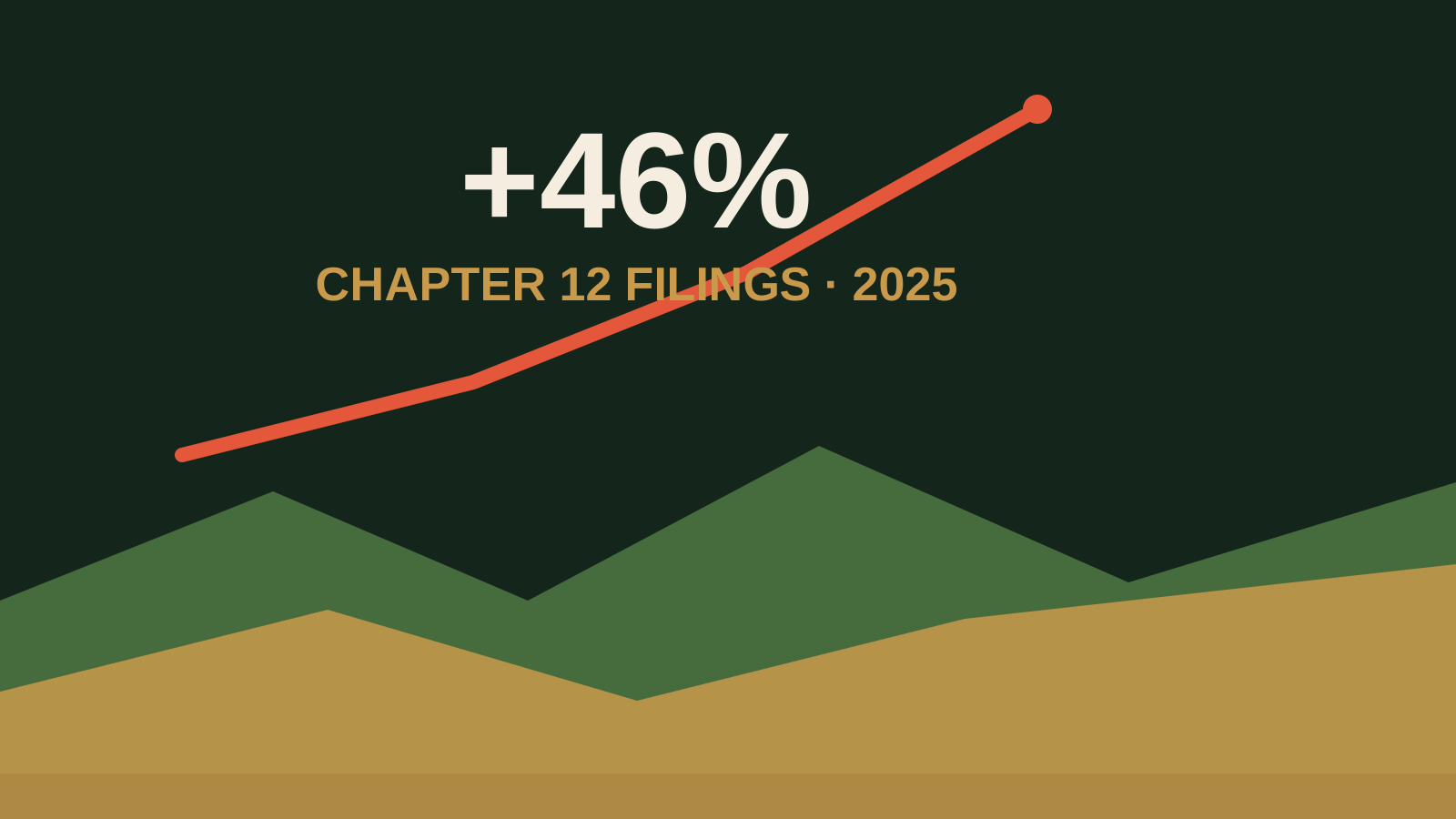
The Debt Is the Story: Chapter 12 Filings Keep Climbing Into 2026
Chapter 12 farm bankruptcies jumped 46% in 2025 and the pressure hasn't let up in 2026. The numbers behind a slow-motion squeeze on family farms.
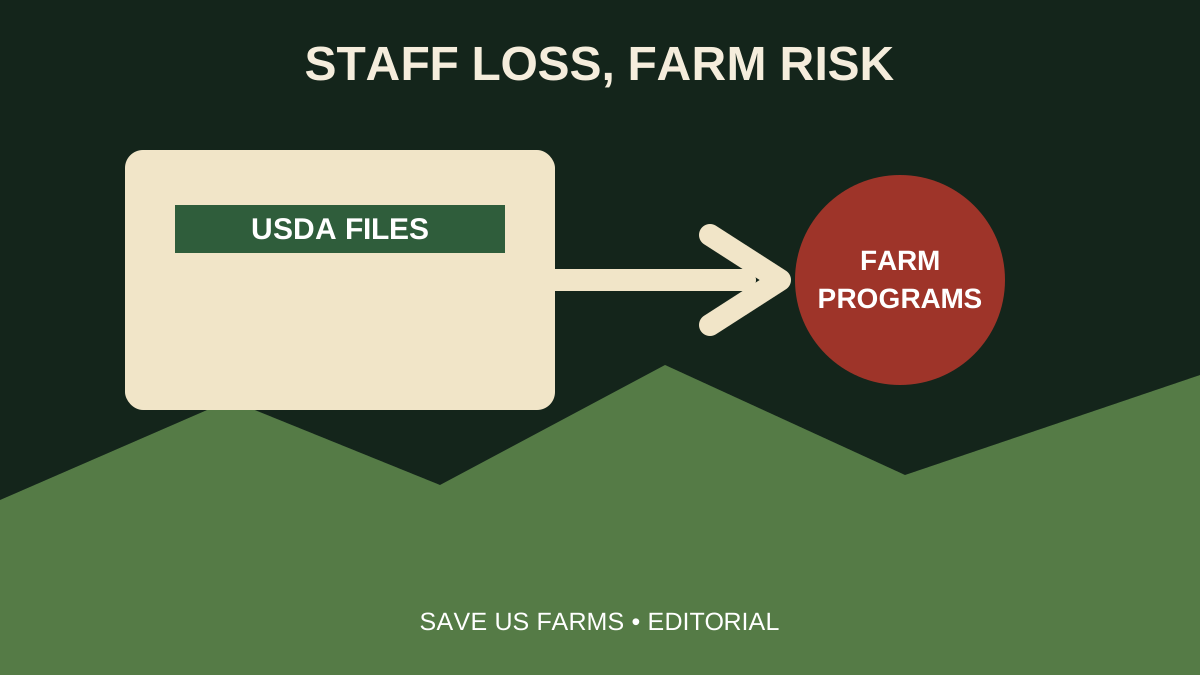
USDA Reorganization Could Hollow Out Farm Trade, Research, and Aid Programs
Relocation orders covering more than half of USDA's Washington workforce could trigger large staff losses across trade promotion, agricultural research, food aid, and nutrition programs.

Fertilizer Cartel: Farmers Demand Feds Speed Antitrust Probe
State grower organizations are pushing federal regulators to accelerate investigations into fertilizer industry pricing practices that have kept costs far above historical levels.

House Dems probe Taylor Farms over massive cyclospora outbreak
Congress scrutinizes one of America's largest produce processors as the outbreak spreads to 41 states with 4,100+ confirmed cases. The question: why wasn't this caught sooner?

Chapter 12 Bankruptcies Jump 46% as Farm Debt Hits Record
Farm bankruptcies surged 46% in 2025, marking the third straight year of increases. Total farm debt is forecast to hit a record $624.7 billion in 2026.

April Bankruptcy Spike: Farm Economy Hits Breaking Point
62 Chapter 12 filings in April 2026 marked a 130% surge from last year, signaling a deepening crisis for family farms grappling with record input costs and debt service.

USDA Exodus: 80% of Staff Ready to Quit Reorganization
As USDA cuts 2,600 D.C. workers to regional hubs, 80% of employees say they'll resign rather than relocate. Farm support collapses at record crisis moment.

Farm Bankruptcies Hit 6-Year High as Debt Crisis Spreads
Chapter 12 farm bankruptcies jumped 46% in 2025 and surge further in 2026, with April filings marking the highest monthly total since 2020 as debt and input costs crush family farmers.

Cattle Futures Collapse as Ranchers Face Perfect Debt Storm
August cattle futures plunged to lowest levels since March as rancher debt loads hit record highs, squeezing margins and threatening operations across the Great Plains.

USDA Invests $500M to Defang Fertilizer Monopoly
Secretary Rollins launches the FIELDS program to expand domestic fertilizer production and break the grip of soaring input costs on struggling farmers.

Record Farm Debt and Interest Costs Driving Bankruptcy Surge
April 2026 brought the highest Chapter 12 filings since 2020, as total farm debt soars to $624.7 billion and interest expenses hit record $33 billion—crushing family farms.

The Fertilizer Squeeze: How a Handful of Giants Control Farm Costs
An FTC antitrust probe into nitrogen, phosphate, and potash giants reveals how industry consolidation is pricing family farms out of production.

USDA Backs Independent Beef Processors With $500M Crisis Program
The agriculture department launches SPUR, a half-billion-dollar effort to rescue small meat processors from the grip of industry consolidation.

April Farm Bankruptcies Spike 130% as Sector Debt Hits Record
Sixty-two Chapter 12 farm bankruptcies filed in April 2026—a 130% jump from last year, highest since 2020. The Midwest saw a 70% surge as debt spirals into new crisis territory.

Forage Farmers Get Revenue Protection — But Only in 12 States
USDA expands crop insurance to cover revenue loss for hay and pasture growers in select states. A step toward financial stability for a sector left behind.

Heat Wave Hits Corn When It Matters Most
Extreme temperatures and dry spells are stressing corn crops during critical pollination, threatening yields across the Corn Belt as farmers face another tough season.

Plains Wheat Collapse Smallest Crop Since 1970s
Drought devastates hard red winter wheat production across Kansas, Colorado, and the Oklahoma panhandle, with crop down 41% and farm economics facing crisis.

Farm Bankruptcies Spike as Debt Hits Record High
Chapter 12 filings jumped 46% in 2025 and hit a six-year peak in April 2026. Farmers are drowning in record debt as costs soar and margins collapse.

Trump Declines USMCA Renewal: A 10-Year Countdown to Ag Chaos
The Trump administration refused to renew USMCA on July 1, triggering a decade-long countdown that could dissolve North American free trade and destabilize US farm markets.

USDA Bets Half a Billion on Domestic Fertilizer
USDA announced a $500M investment to expand U.S. fertilizer production, targeting input costs that are crushing farm debt. The FIELDS program opens applications August 15.

Colorado Wheat Harvest Collapses Under Late Freezes, Drought
Late-season freezes have wiped out wheat harvests across eastern Colorado, forcing farmers to abandon crops. Drought and climate have made survival impossible.

When the Farmer Ages Out: Succession Debt and the Next Crisis
Farm succession is becoming a crisis. Aging operators and mounting debt mean the next generation faces an impossible choice: take on inherited liabilities or let the land go.

Reading the Rancher's Playbook in Cattle Market Signals
Beef cattle auctions reveal a strategy of survival: producers hold back heifers to rebuild herds, but the numbers show they can't afford to rebuild fast enough.

Why Your Cookout Costs More, But Farmers Aren't Getting Paid
Beef prices at the grocery store hit a record high this Fourth of July, while the farmers behind the meat struggle with razor-thin margins.

China Buys US Soybeans Again—But a Trade Trap Looms
China resumes soybean purchases after a trade deal, lifting prices and morale. Yet farmers warn the deal leaves them exposed to sudden policy shifts and volatile markets.

Trump suspends phosphate tariffs, cutting fertilizer costs by 22%
Emergency order lifts duties on Morocco imports for 8 months, saving farmers $1.82 billion annually as input costs continue crushing margins.

Extreme weather deepens farm debt crisis
Frost, flooding, and planting delays are ravaging Midwest crops and forcing emergency spending, intensifying the debt trap that makes consolidation inevitable.

FTC Opens Fertilizer Pricing Investigation Amid Farmer Crisis
Amid mounting input costs and industry consolidation, the FTC launches formal antitrust probe into major fertilizer producers as farmers face historic margin squeeze.

April Farm Bankruptcies Hit Highest Monthly Total Since 2020
Chapter 12 filings jumped 130% in April 2026, signaling a structural farm debt crisis accelerating faster than forecasts predicted.

Higher Loan Caps, Same Debt Trap: The 2026 Farm Bill Draft
The Senate's Agricultural Act of 2026 raises loan ceilings as sector debt hits $624.7 billion — but borrowing more is not the same as getting out.

Spring Drought Dries Up Farm Cash as Midwest Hits 127-Year Low
Wisconsin, Minnesota, and Michigan recorded their driest May in over a century, threatening crop yields and farm income as drought spreads across the region.

Federal Lands in Play: Grazing Access Becomes a Flashpoint
As ranchers face tighter margins and consolidation pressure, competition for federal grazing permits is reshaping who can survive on the land—and who gets bought out.

On the Screwworm Line: Ranchers Across the Border, One Crisis
As the parasitic pest hits ranches on both sides of the US-Mexico border, cattle producers share how it's squeezing operations and threatening what little margin they have left.

Screwworm Returns: Another Cost Shock for Squeezed Cattle Ranchers
A livestock parasite reemerging on the U.S.-Mexico border threatens cattle herds and ranch margins already compressed by consolidation, debt, and volatile commodity prices.

The Debt Squeeze Pushing Family Farms Into Chapter 12
Family farm Chapter 12 bankruptcies have been climbing as commodity prices fall, input costs stay high, and market consolidation squeezes producers from both sides.

The Screwworm Is Back, and Cattle Country Is Bracing
USDA confirmed the first domestic New World Screwworm cases since the 1960s — seven reports by mid-June. Senate Democrats are pressing the agency for more action and transparency.

The Debt Is Coming Back: What Rising Chapter 12 Filings Tell Us About Farm Country
Chapter 12 farm bankruptcies are the canary in the coal mine for ag debt. Here's how to read the court data — and why the squeeze is structural, not just a bad year.

Farm Credit's $86B Capital Masks a Growing Debt Stress Signal
The Farm Credit System's capital hit $86.4 billion in Q1 2026, but nonperforming assets climbed to 1.09% — a warning shot for farmers already squeezed by input costs.

Four Companies, One Seed Aisle: How Input Consolidation Quietly Taxes Every Farmer
A handful of firms now dominate the seeds and chemicals farmers can't farm without. Here's how the Bayer–Corteva era squeezes growers — explained simply.